If you have recently received a sleep apnea diagnosis, you may be wondering: what is moderate sleep apnea, and how seriously should you take it? Moderate sleep apnea generally means breathing stops or becomes significantly reduced 15–29.9 times per hour during sleep. Most cases involve moderate obstructive sleep apnea, in which the upper airway repeatedly narrows or collapses.
You may also be asking: is moderate sleep apnea dangerous? Untreated breathing interruptions can contribute to poor sleep quality, daytime fatigue, and increased cardiovascular risk. Fortunately, moderate sleep apnea treatment options are available. Questions about moderate sleep apnea life expectancy are understandable, but a diagnosis alone cannot predict how long someone will live.
What Actually Happens When You Have Sleep Apnea?
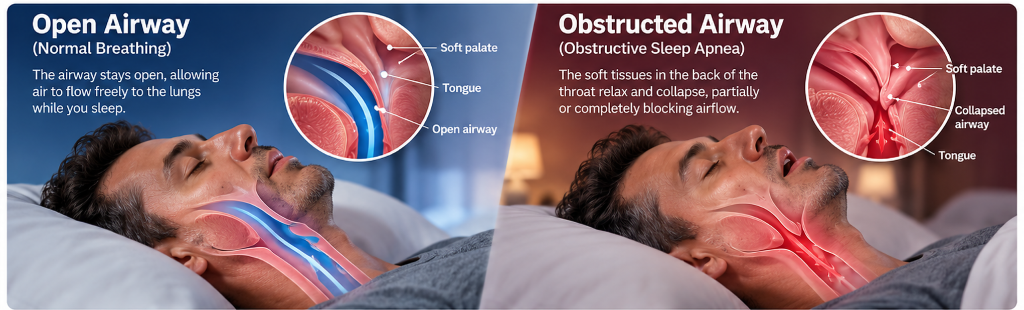
When sleep is restful and uninterrupted, the airway in your throat stays relaxed yet open, letting air flow smoothly down to your lungs like water through a garden hose.
With obstructive sleep apnea, the muscles supporting that pathway relax just a bit too much. The soft tissues in the back of the throat collapse into the airway, partially choking off airflow (called a hypopnea) or shutting it down entirely (an apnea).
Here is what that looks like beneath the surface:
- Your oxygen dips: As breathing halts, the oxygen in your bloodstream steadily drops.
- Your brain briefly responds: Repeated breathing changes may trigger short arousals and changes in heart rate and blood pressure. These responses can happen without a full awakening.
- The pattern may repeat: Breathing often resumes with a snort or gasp, although not everyone makes an audible sound. Frequent events can fragment sleep.
Moderate sleep apnea means an average of 15 to fewer than 30 breathing events per hour. These events can interrupt restful sleep, but their timing and effects differ from person to person.
Understanding Your Numbers: The AHI Scale
Doctors grade the severity of sleep apnea using the Apnea-Hypopnea Index (AHI). It’s simply the average number of times your breathing pauses or slows down per hour of sleep:
- Normal: Fewer than 5 times an hour
- Mild: 5 to 14.9 times an hour
- Moderate: 15 to 29.9 times an hour
- Severe: 30 or more times an hour
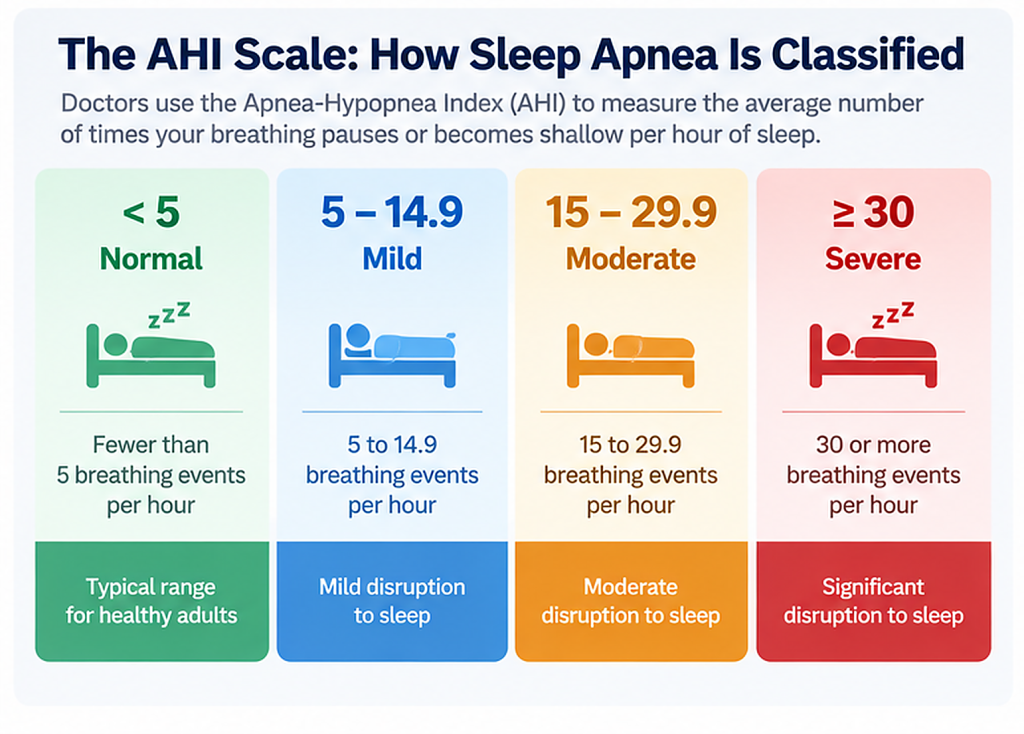
AHI is an average, not a count of how often you wake up. Breathing events can occur closer together at certain times of night, and you may not notice them. Understanding the different types of sleep apnea can also help explain how breathing disruptions occur and why their causes may differ.
Common Symptoms You Should Not Ignore
Symptoms can develop gradually. People sometimes attribute fatigue to stress, age, or a demanding schedule. Warning signs include loud snoring, pauses in breathing noticed by a partner, gasping during sleep, daytime sleepiness, morning headaches, difficulty concentrating, irritability, and repeated nighttime awakenings. Some people have significant breathing interruptions without feeling especially sleepy.
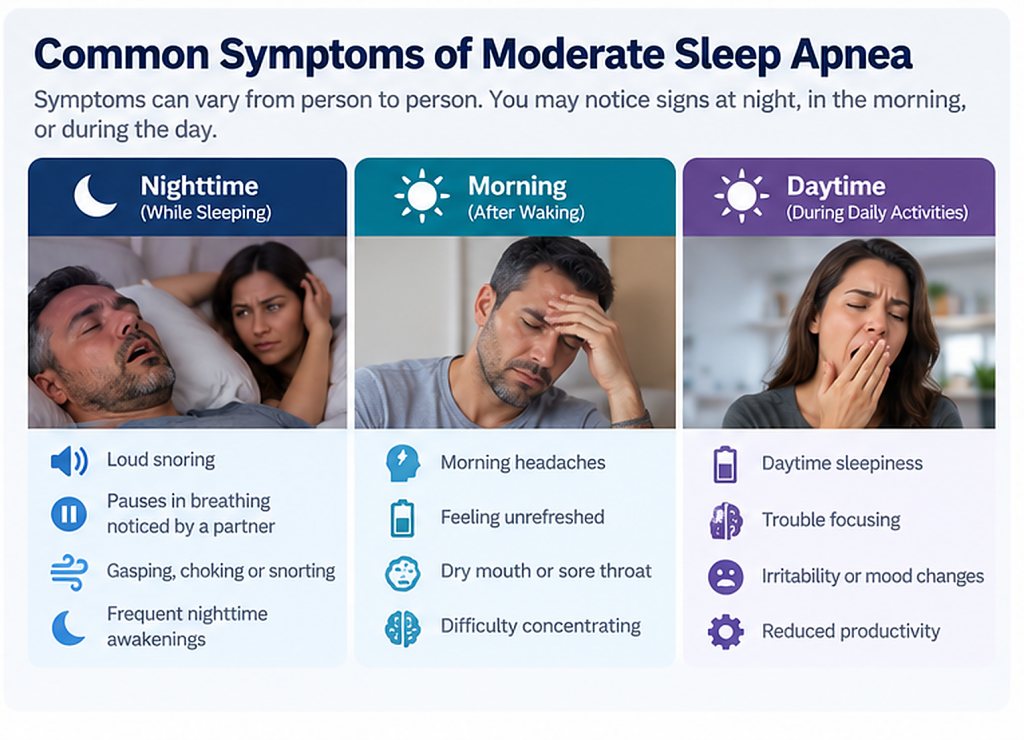
If several signs sound familiar, learn how to diagnose sleep apnea.
Health Risks: Why "Moderate" Still Demands Your Attention
The word “moderate” describes the frequency of breathing events, not necessarily how a person feels or their individual cardiovascular risk. Sleep apnea is associated with several health conditions, although the strength of evidence varies by outcome.
Heart and Blood Pressure: The Hidden Stress
Obstructive events can cause intermittent oxygen drops and activation of the sympathetic nervous system. Over time, these changes may contribute to cardiovascular stress. The evidence is strongest for an association with high blood pressure; links with atrial fibrillation and stroke also warrant clinical attention.
- High blood pressure: Obstructive sleep apnea is associated with hypertension and reduced nighttime blood-pressure dipping, although this does not occur in every patient.
- Heart rhythm changes: Obstructive sleep apnea is associated with atrial fibrillation. The relationship is complex, and sleep apnea is not the sole cause.
- Cardiovascular health: Research links sleep apnea with higher rates of cardiovascular disease and stroke, but other risk factors also contribute.
Metabolism, Mood, and Your Waking Hours
Sleep apnea may affect more than nighttime breathing. Studies report associations with insulin resistance and type 2 diabetes, but they do not establish that sleep apnea alone causes diabetes.
Disrupted sleep can contribute to trouble concentrating, irritability, morning headaches, and fatigue. Excessive daytime sleepiness can also impair driving; avoid driving when drowsy.
How Sleep Apnea May Affect Life Expectancy
If you have moderate sleep apnea, it is natural to wonder whether it could shorten your life. Studies have found that obstructive sleep apnea is associated with cardiovascular problems and, particularly in more severe cases, a higher risk of death. But these studies cannot tell us exactly how much of that risk comes from sleep apnea rather than age, weight, smoking, or other health conditions. There is no scientifically reliable number of years lost from a diagnosis of moderate sleep apnea.
Your outlook depends on more than the AHI score. Oxygen levels during sleep, blood pressure, existing heart or metabolic conditions, symptoms, and access to effective care all matter. Two people with the same AHI can have very different health profiles.
Treatment can reliably reduce obstructive breathing events, and many people experience better sleepiness and quality of life. However, it would be misleading to promise that CPAP or another treatment will add a specific number of years to your life. The best next step is to review your results and personal risk factors with a qualified clinician.
The takeaway: moderate sleep apnea deserves attention, but it is not a prediction of your lifespan. Understanding your results and choosing a treatment you can use consistently are practical ways to protect your sleep and overall health.
Moderate Sleep Apnea Treatment: What Actually Works?
CPAP Therapy
Continuous positive airway pressure (CPAP) uses gently pressurized air delivered through a mask to help keep the airway open. It is a highly effective treatment for obstructive breathing events and often improves sleepiness and quality of life when used consistently. Mask fit, comfort settings, and follow-up support can help patients adjust.
Oral Appliance Therapy
A custom-fitted mandibular advancement device may be appropriate for people who prefer an alternative or cannot tolerate CPAP. A qualified dentist should fit it, and follow-up sleep testing helps confirm that it is effective. CPAP generally reduces breathing events more effectively.
Lifestyle Measures
Weight management when appropriate, side sleeping for positional sleep apnea, limiting alcohol, avoiding smoking, and regular physical activity may support breathing and overall health. These steps do not always replace prescribed treatment.
How to Know Whether You Need a Sleep Test
If you snore loudly, wake up gasping, or often feel sleepy during the day, ask a clinician whether a sleep test is right for you. Many adults can test at home. A laboratory sleep study counts breathing events per hour of actual sleep (AHI); home tests commonly estimate events per hour of recording time (REI), so the numbers may differ. If a home test is negative or unclear despite ongoing symptoms, a laboratory study may be needed.
Conclusion: Better Sleep Starts With Understanding Your Risk
A moderate diagnosis is a reason to act, not to panic. Repeated breathing interruptions can affect sleep quality and are associated with important health risks, but they do not determine an individual’s lifespan. Effective options include CPAP, oral appliances, and supportive lifestyle changes. The right approach begins with an accurate evaluation and a conversation with a qualified healthcare professional. If symptoms are affecting your energy, concentration, or daily life, you do not need to wait for them to become severe before seeking answers.
Take the First Step Toward Better Sleep
SleepCare Online offers a virtual pathway for eligible patients to complete screening, test at home, and receive physician review. If sleep apnea is diagnosed and CPAP is clinically appropriate, a prescription may be provided.
References
- American Heart Association. Obstructive Sleep Apnea and Cardiovascular Disease: A Scientific Statement. Circulation (2021). https://pubmed.ncbi.nlm.nih.gov/34148375/
- Patil SP et al. Treatment of Adult Obstructive Sleep Apnea With Positive Airway Pressure: Clinical Practice Guideline. Journal of Clinical Sleep Medicine (2019). https://pmc.ncbi.nlm.nih.gov/articles/PMC6374094/
- Ramar K et al. Clinical Practice Guideline for Oral Appliance Therapy. J Clin Sleep Med (2015). https://doi.org/10.5664/jcsm.4858
- Punjabi NM. The Epidemiology of Adult Obstructive Sleep Apnea. Proceedings of the American Thoracic Society (2008). https://pmc.ncbi.nlm.nih.gov/articles/PMC2645248/
- Kapur VK et al. Clinical Practice Guideline for Diagnostic Testing for Adult Obstructive Sleep Apnea. J Clin Sleep Med (2017). https://doi.org/10.5664/jcsm.6506
Frequently Asked Questions
Symptoms and severity sometimes improve with weight loss or changes to contributing conditions, but follow-up testing is important before stopping treatment.
Not always. Treatment depends on symptoms, other conditions, patient preference, and clinician assessment. Oral appliances may be an option for selected patients.
Sleep apnea is associated with several cardiovascular conditions, but these have multiple causes. Early evaluation and appropriate care matter.
Mild generally means 5–14.9 events per hour, while moderate means 15–29.9.

Chris Vasta is the President of The CPAP Shop and a leading authority in sleep and respiratory therapy. With years of hands-on experience in the industry, Chris collaborates closely with top manufacturers and offers expert insights that help shape the design and performance of new CPAP products. He is frequently sought after to evaluate prototypes, provide professional reviews of new releases, and share his expertise to help patients and clinicians make informed decisions about sleep therapy solutions.
As the President of The CPAP Shop, Chris works hard to make sure every customer’s needs are met by stocking hundreds of the highest quality CPAP items. He understands the challenge sleep apnea brings to patients and is dedicated to improving the quality of our customer’s lives.