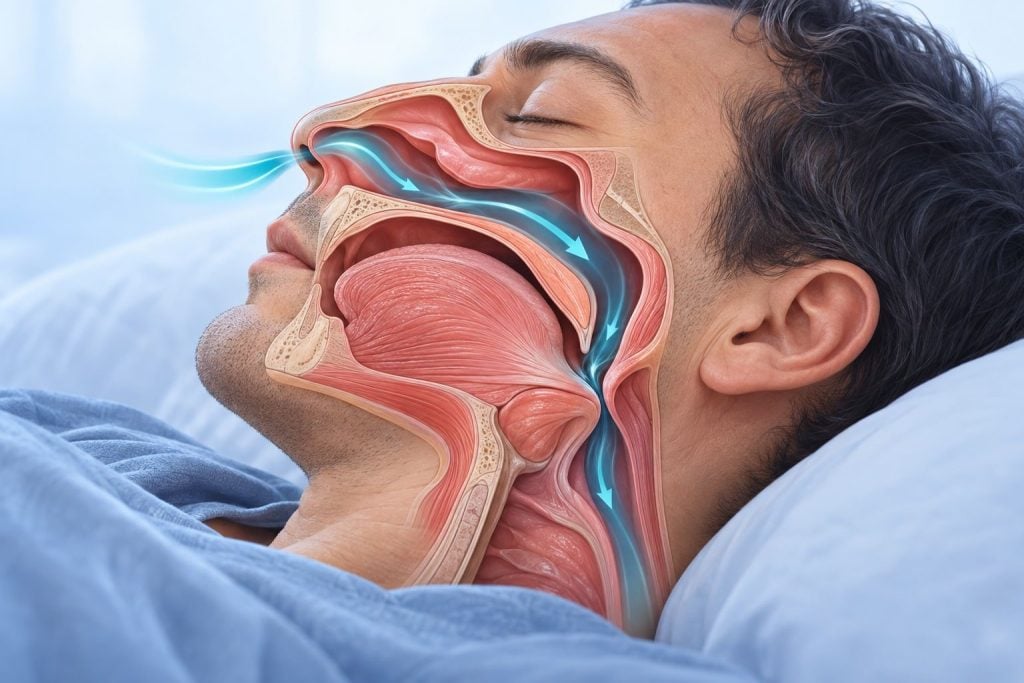
Deviated septum and sleep apnea can occur together, but the relationship isn’t as direct as it seems. A bent nasal septum can restrict airflow, encourage mouth breathing, and worsen snoring. Obstructive sleep apnea (OSA), by contrast, usually involves repeated collapse farther back in the upper airway.
So, can having a deviated septum cause sleep apnea? It may add to breathing resistance or make existing OSA harder to manage, but it’s rarely the only cause. Witnessed breathing pauses, gasping, morning headaches, or daytime sleepiness deserve a sleep evaluation, not an assumption about a blocked nose.
Key Takeaways
- A deviated septum may worsen obstruction, snoring, and mouth breathing, but that alone doesn’t mean OSA.
- A nasal exam identifies septal deviation; a sleep study confirms breathing pauses.
- Treating nasal obstruction may improve comfort and PAP use, though septoplasty alone rarely eliminates OSA.
What Is a Deviated Septum?
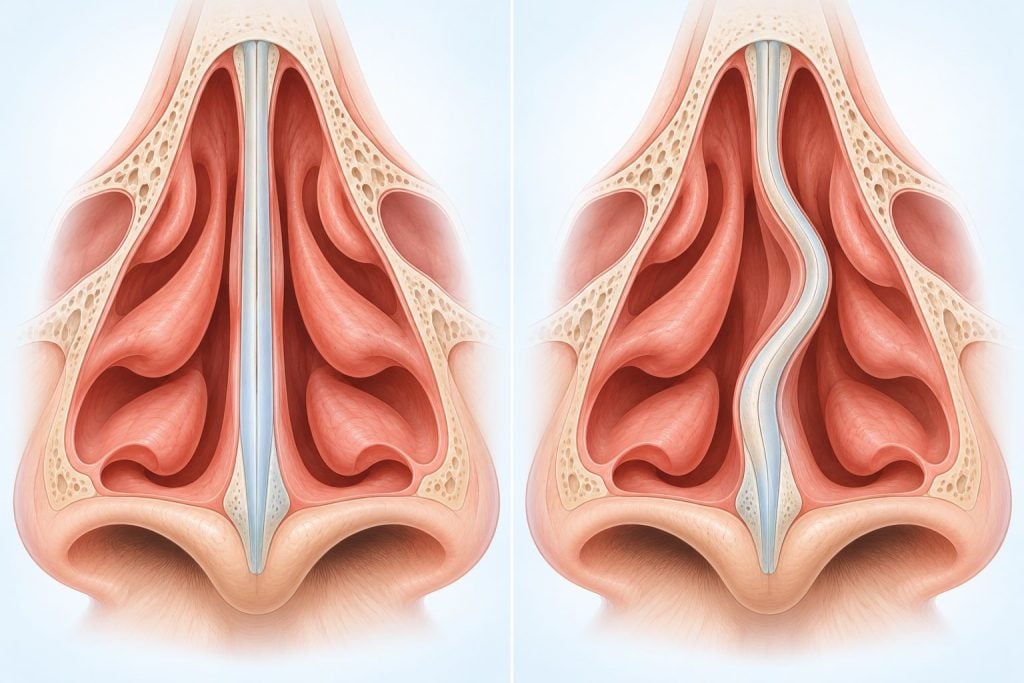
The septum is the wall of cartilage and bone separating the nasal passages. When it sits off center, one side is narrower. Some people are born this way; others develop it after an injury. Mild deviation may cause no symptoms, but more substantial obstruction can lead to congestion, nosebleeds, mouth breathing, or noisy sleep. Allergies and swollen turbinates can add to the blockage, so an ENT exam matters before treatment.
How Deviated Septum and Sleep Apnea Are Connected
OSA occurs when soft tissues in the throat repeatedly narrow or close the upper airway. Nasal blockage sits upstream from that collapse — it raises breathing effort and promotes mouth breathing, but it’s only one part of a system that also includes body weight, jaw anatomy, tonsil size, and sleeping position.
Research links septal deviation with OSA diagnoses, but association doesn’t prove the septum alone caused it. Nasal obstruction is best understood as a contributing factor, most relevant to obstructive disease, not central sleep apnea. See Different types of sleep apnea for comparison.
Symptoms That Point Beyond a Blocked Nose
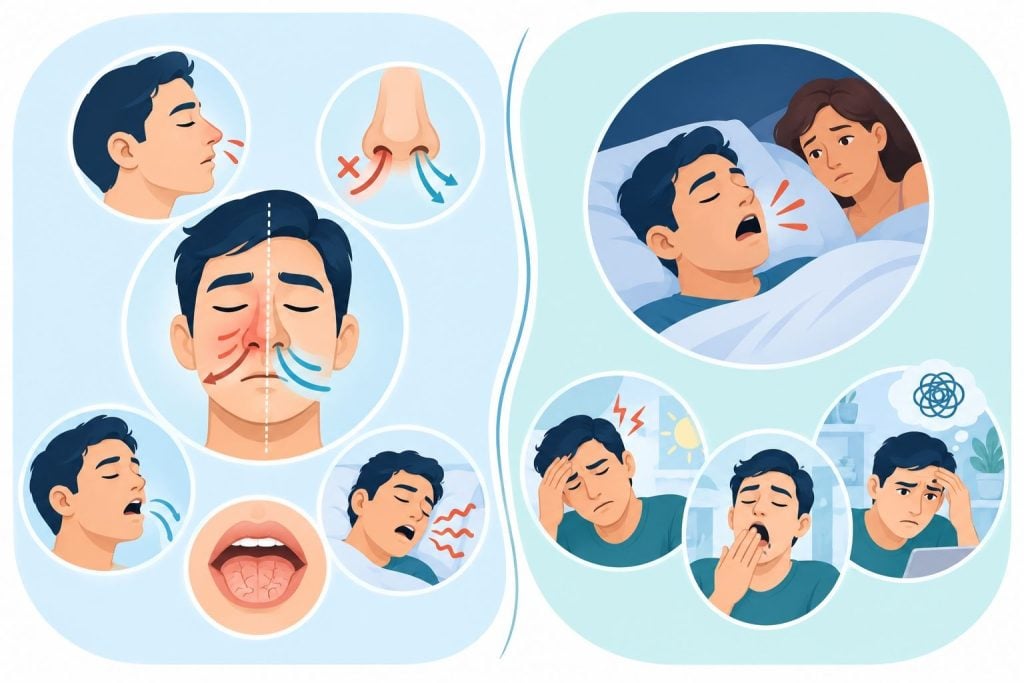
A stuffy nose, snoring, dry mouth, or restless sleep can occur without apnea. OSA becomes more concerning when a bed partner notices breathing pauses, choking, or gasping, or when you wake with headaches and daytime sleepiness. Trouble concentrating and high blood pressure add to the concern. A wearable or a change in your respiratory rate while sleeping may raise questions, but can’t confirm a diagnosis alone — seek prompt care for chest pain, severe shortness of breath, or fainting.
How to Diagnose Sleep Apnea When You Have a Deviated Septum
Diagnosis involves two separate questions. An ENT assesses airflow or structural obstruction; a sleep clinician evaluates snoring, witnessed events, and other risk factors. The next step in how to diagnose sleep apnea is an objective sleep study, not a mirror test or checklist.
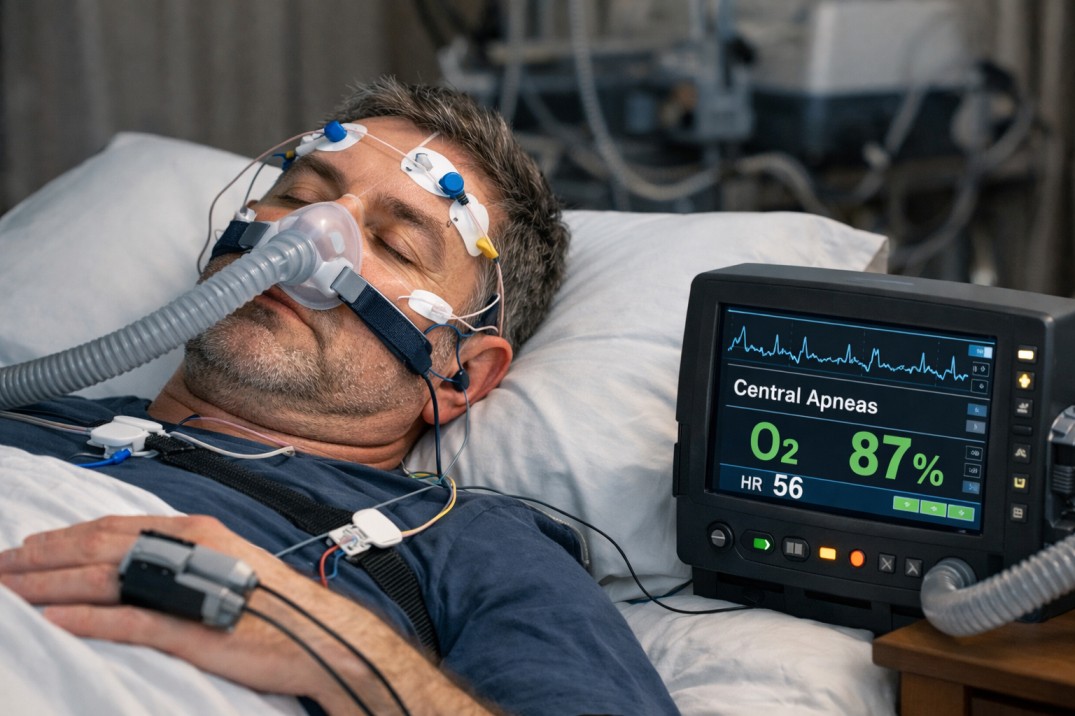
For many adults with suspected uncomplicated OSA, an at home sleep apnea test measures airflow, breathing effort, pulse, and oxygen patterns during a typical night. An in-lab study may be better when another sleep disorder or heart or lung condition is suspected.
Treatment Options for Nasal Obstruction and OSA
Treatment should match what testing finds. Saline rinses, allergy treatment, or nasal sprays may ease inflammation but can’t straighten cartilage or bone. Nasal strips improve the sensation of airflow without treating airway collapse, and mouth taping should be avoided when OSA is suspected. Side sleeping, limiting alcohol near bedtime, and clinician-guided exercises for sleep apnea can support a plan but shouldn’t replace prescribed therapy.
Septoplasty can improve nasal breathing in selected patients. Evidence reviews find isolated nasal surgery often improves congestion, sleep quality, and PAP tolerance, though the average change in apnea severity is modest — surgery may clear a barrier to treatment without serving as a stand-alone cure. Confirmed OSA may still call for PAP therapy, an oral appliance, or another individualized approach.
The Bottom Line on Deviated Septum and Sleep Apnea
A crooked septum can restrict nasal breathing and add to snoring, mouth breathing, restless sleep, or difficulty using PAP — but it doesn’t, by itself, establish an OSA diagnosis. If you’re wondering can a deviated septum cause sleep apnea, the most accurate answer is that it can contribute to the conditions around obstructive breathing, while other airway and health factors usually matter too. An ENT exam can define the nasal problem, and a sleep study can show whether clinically important breathing interruptions are present. Treat both conditions on their own evidence, rather than assuming that fixing one resolves the other.
If you’ve been diagnosed with OSA and PAP therapy is recommended, learn how to get a CPAP prescription online through SleepCare Online. A licensed clinician can review your information and determine whether a prescription is appropriate.
Frequently Asked Questions
Usually not. Septoplasty can improve airflow and make PAP easier to use, but throat-level collapse can remain, so repeat testing is needed before changing treatment.
Yes. Restricted airflow promotes mouth breathing and turbulence, which may increase snoring — though snoring alone doesn’t prove apnea is present.
Congestion is usually noticeable while awake. Apnea is more likely when snoring is joined by breathing pauses, gasping, headaches, or daytime sleepiness.
Often, yes. Mask selection, humidification, and treating nasal inflammation help; persistent obstruction may justify an ENT evaluation.
Either is reasonable — an ENT evaluates nasal structure, a sleep clinician assesses sleep-disordered breathing, and many benefit from seeing both.

Chris Vasta is the President of The CPAP Shop and a leading authority in sleep and respiratory therapy. With years of hands-on experience in the industry, Chris collaborates closely with top manufacturers and offers expert insights that help shape the design and performance of new CPAP products. He is frequently sought after to evaluate prototypes, provide professional reviews of new releases, and share his expertise to help patients and clinicians make informed decisions about sleep therapy solutions.
As the President of The CPAP Shop, Chris works hard to make sure every customer’s needs are met by stocking hundreds of the highest quality CPAP items. He understands the challenge sleep apnea brings to patients and is dedicated to improving the quality of our customer’s lives.