Tongue signs of sleep apnea can provide clues that the airway is crowded, but they cannot confirm a sleep disorder by themselves. A large tongue, tooth-edge indentations, or a tongue that sits high in the mouth may be associated with obstructive sleep apnea (OSA). Clinicians may consider these obstructive tongue signs of sleep apnea alongside snoring, witnessed breathing pauses, gasping, morning headaches, and daytime sleepiness.
Scalloped tongue signs of sleep apnea describe a wavy or indented tongue edge created by pressure against the teeth. The broader phrase mouth tongue signs of sleep apnea may also include dry mouth, tongue enlargement, or a crowded view of the throat. These findings have many possible causes. Paired with nighttime breathing symptoms, they’re worth raising with a clinician — not a substitute for a sleep study.
Key Takeaways
- A scalloped or enlarged tongue may raise suspicion for OSA but isn’t diagnostic on its own.
- The combination of oral findings and classic symptoms matters more than any single sign.
- A clinician-directed sleep test is the only reliable way to confirm or rule out sleep apnea.
What Do These Oral Warning Signs Look Like?
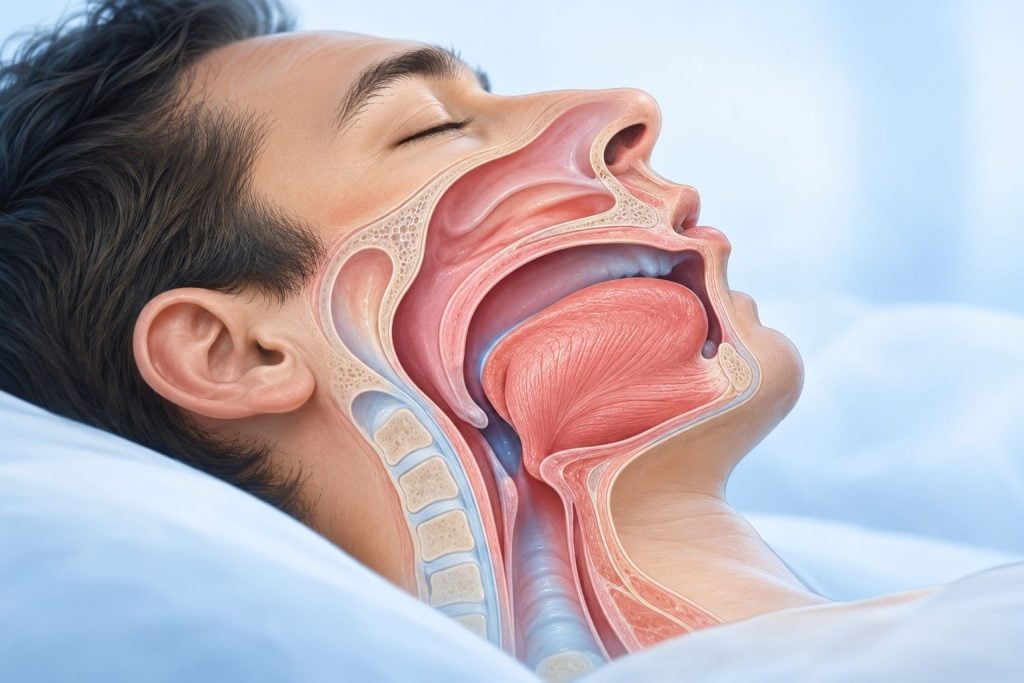
The tongue helps shape the upper airway. During sleep, muscle tone drops, and the tongue and nearby tissues can shift backward — in someone with limited airway space, that relaxation can contribute to repeated narrowing or closure.
A scalloped tongue
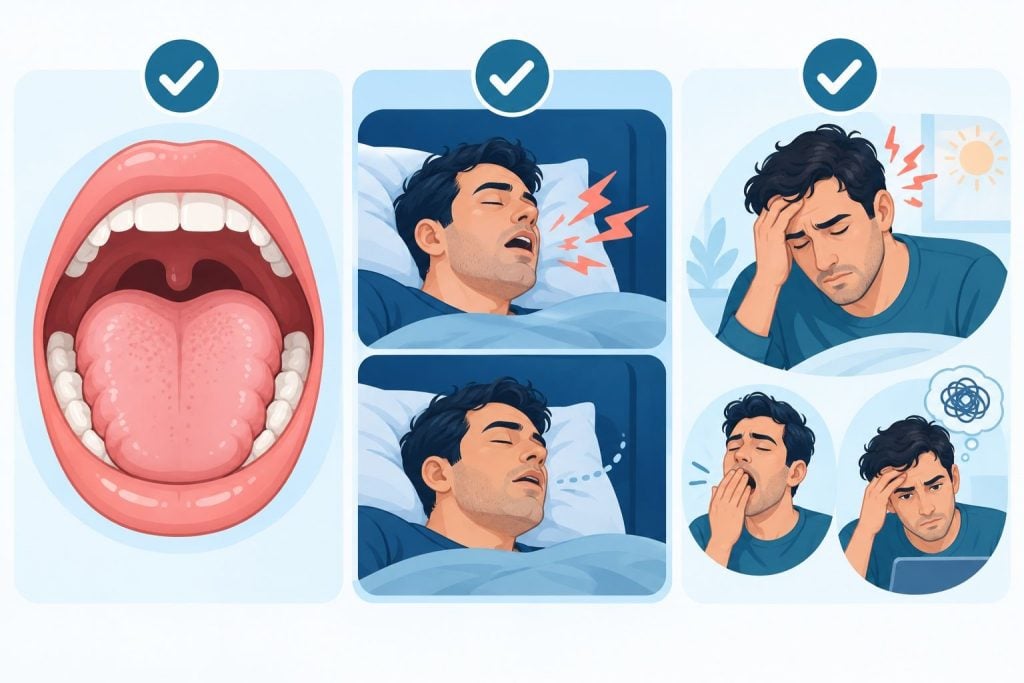
A scalloped tongue has ridges or indentations along its sides where it rests against the teeth. Research links tongue scalloping to abnormal sleep-study findings in high-risk patients and to intermittent nighttime oxygen drops. It can also come from clenching, swelling, dehydration, thyroid disease, or simply normal anatomy — a clue, not a verdict.
An enlarged or crowded tongue
A tongue that’s large relative to the mouth leaves less room for airflow. Tongue volume and fat content have been linked to OSA in imaging research. Clinicians may also note throat visibility with the mouth open — part of a Mallampati assessment, which estimates crowding but doesn’t diagnose apnea.
Other Mouth and Tongue Findings
A dry mouth on waking can come from sleeping with the mouth open, nasal congestion, medication, dehydration, or a leaking PAP mask. Teeth grinding, drooling, and a sore tongue turn up in disrupted sleep too, but none is specific to OSA. A dentist may spot scalloping or tooth wear; a clinician looks at the whole airway and health history.
It helps to look beyond the mouth, too. Established sleep apnea symptoms — loud snoring, witnessed breathing pauses, choking or gasping, morning headaches, poor concentration, and excessive daytime sleepiness — carry real weight. OSA becomes more likely when several of these show up together, especially alongside obesity, high blood pressure, atrial fibrillation, or a family history.
How Clinicians Diagnose Obstructive Sleep Apnea From Oral Clues
A mirror check can’t tell you whether breathing stops during sleep, how often, or whether oxygen levels drop. A clinician will typically examine the tongue, tonsils, palate, nasal passages, jaw position, neck circumference, and blood pressure alongside your symptoms and history.
That clinical assessment is where how to diagnose sleep apnea really begins. For many adults suspected of uncomplicated OSA, an at home sleep apnea test can record breathing signals and oxygen levels during a typical night at home. An in-lab study may fit better when another sleep disorder or a significant heart, lung, neurologic, or neuromuscular condition is suspected.
It’s also worth understanding the different types of sleep apnea. Tongue anatomy is most relevant to obstructive disease — central sleep apnea involves reduced breathing effort from the brain and can’t be spotted by looking at the tongue.

When Should You Seek an Evaluation?
Talk to a healthcare professional if a scalloped or crowded tongue shows up alongside one or more of the following:
- Loud, frequent snoring or witnessed breathing pauses
- Waking with choking, gasping, dry mouth, or morning headaches
- Persistent daytime sleepiness, fatigue, or trouble concentrating
- High blood pressure, atrial fibrillation, heart disease, stroke, or type 2 diabetes
Seek urgent medical care for chest pain, severe shortness of breath, fainting, new weakness or numbness, or dangerous sleepiness while driving. Those symptoms shouldn’t wait for routine sleep testing.
What Your Tongue Can — and Can't — Tell You
A scalloped, enlarged, or crowded tongue is a useful clue, especially alongside snoring, breathing pauses, or daytime sleepiness. On their own, though, these are just obstructive tongue signs of sleep apnea — not a diagnosis, and not a reason to self-treat. The safest next step is a clinical assessment followed by the right sleep study. Once OSA is confirmed, treatment may include PAP therapy, an oral appliance, positional therapy, weight-management support, or another individualized plan built around your results.
If you’ve already been diagnosed and need PAP therapy, learn how to Get a CPAP prescription online through SleepCare Online. A licensed clinician can review your information and determine whether a prescription is appropriate.
Frequently Asked Questions
No. It can be associated with OSA, especially alongside snoring or sleepiness, but it has several other causes — a sleep study is needed to actually diagnose it.
Not exactly — it’s more the reverse. A relatively large tongue or extra tongue fat can contribute to airway crowding and raise OSA risk.
Pressure against the teeth creates those indentations, from swelling, clenching, dehydration, thyroid disease, or plain anatomy. If it’s persistent, it’s worth a clinical or dental look.
A dentist may spot oral risk markers and recommend further evaluation, but a visual exam alone can’t diagnose OSA — that takes a sleep study interpreted by a qualified clinician.
CPAP holds the airway open with gentle air pressure; it isn’t designed to reshape the tongue. Treating OSA can still meaningfully improve symptoms even if scalloping remains.

Chris Vasta is the President of The CPAP Shop and a leading authority in sleep and respiratory therapy. With years of hands-on experience in the industry, Chris collaborates closely with top manufacturers and offers expert insights that help shape the design and performance of new CPAP products. He is frequently sought after to evaluate prototypes, provide professional reviews of new releases, and share his expertise to help patients and clinicians make informed decisions about sleep therapy solutions.
As the President of The CPAP Shop, Chris works hard to make sure every customer’s needs are met by stocking hundreds of the highest quality CPAP items. He understands the challenge sleep apnea brings to patients and is dedicated to improving the quality of our customer’s lives.