If you have obstructive sleep apnea (OSA) and obesity, you may have heard about using a GLP-1 for sleep apnea. But is Zepbound approved for sleep apnea, and how does Zepbound work for sleep apnea? The short answer is yes: Zepbound is FDA-approved to treat moderate-to-severe OSA in adults with obesity when used with a reduced-calorie diet and increased physical activity. It is the first medication approved in the United States for this specific purpose.
Zepbound is a dual GIP and GLP-1 receptor agonist—not evidence that every GLP 1 approved for sleep apnea search result refers to an FDA-approved OSA treatment. The approval applies specifically to Zepbound (tirzepatide) and a defined group of adults. A GLP-1 for sleep apnea also does not automatically replace CPAP or eliminate the need for testing, follow-up care, and healthy lifestyle changes.
| Key Takeaway: Zepbound may improve OSA largely through weight reduction. It is not approved for central sleep apnea, for mild OSA, for adults without obesity, or as a universal replacement for positive airway pressure therapy. |
Why Are Obesity and Obstructive Sleep Apnea Connected?
OSA occurs when the upper airway repeatedly narrows or closes during sleep. Extra tissue around the neck, tongue, and airway can make collapse more likely. Abdominal weight can also affect breathing mechanics. This helps explain why obesity is an important—and sometimes modifiable—OSA risk factor.
The relationship is not simple, however. Anatomy, age, family history, muscle responsiveness, hormonal changes, and other health conditions can also affect risk. People of any body size can develop OSA, and weight loss does not guarantee that the condition will resolve.
The connection between sleep apnea and obesity is relevant to Zepbound because the medication reduces appetite and food intake, supporting substantial weight loss for many eligible patients. As body weight decreases, the physical load affecting the airway may also decrease.
It is equally important to understand the different types of sleep apnea. Central sleep apnea involves disrupted breathing signals from the brain and is not treated by reducing weight-related airway pressure.
Is Zepbound Approved for Sleep Apnea in the United States?
The FDA approved Zepbound in December 2024 to treat moderate-to-severe OSA in adults with obesity. It must be used with a reduced-calorie diet and increased physical activity. The approval does not cover all people who snore, everyone diagnosed with OSA, or other medications in the GLP-1 class.
In practical terms, having a GLP 1 approved for sleep apnea does not mean that all drugs in this category share the same indication. Patients should confirm the product, diagnosis, and eligibility criteria with a qualified prescriber.
Zepbound contains tirzepatide, which activates both GIP and GLP-1 receptors. The FDA based the OSA approval on two randomized, double-blind, placebo-controlled studies involving 469 adults with obesity and moderate-to-severe OSA who did not have type 2 diabetes. One study enrolled people who were unable or unwilling to use positive airway pressure (PAP); the other enrolled people who were using PAP and planned to continue.
After 52 weeks, participants receiving tirzepatide experienced greater improvements in the apnea-hypopnea index (AHI) than those receiving placebo. They also lost more weight, and more participants reached remission or mild OSA without excessive daytime sleepiness. These results are encouraging, but they do not mean every patient will respond in the same way.
How Does Zepbound Work for Sleep Apnea?
Zepbound reduces appetite and food intake by activating GIP and GLP-1 receptors. For patients with obesity, the resulting weight loss can reduce some of the tissue and mechanical load that contribute to upper-airway collapse. The FDA describes weight reduction as the way Zepbound improves OSA.
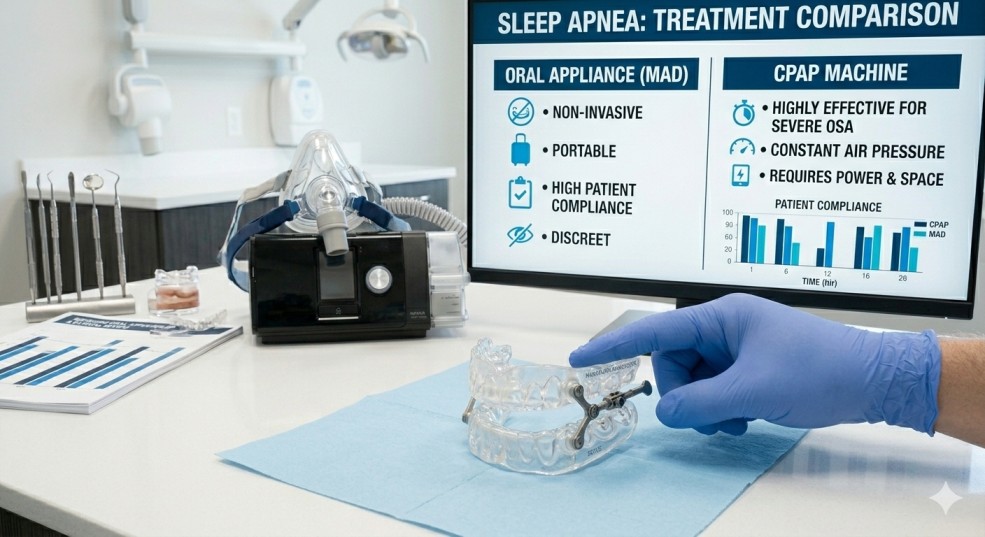
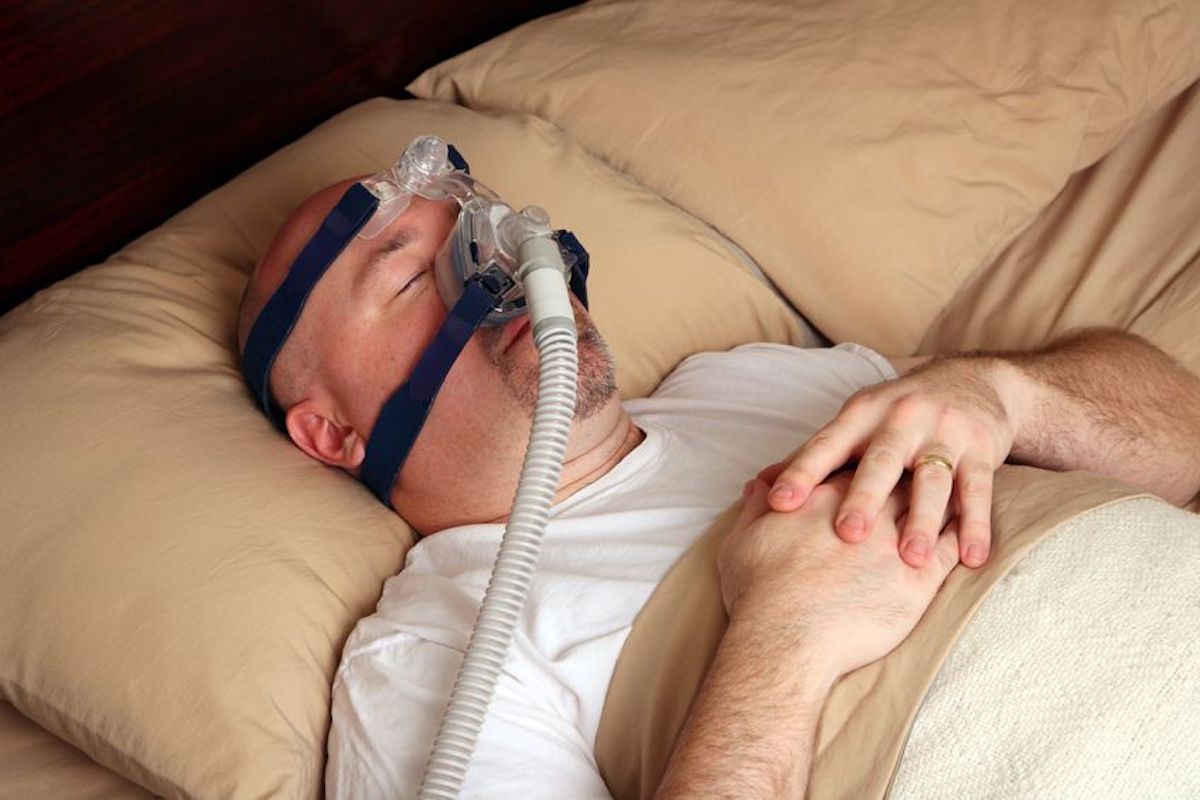
This is different from CPAP. CPAP sends pressurized air through a mask to help keep the airway open while it is being used. Zepbound works gradually as part of a longer-term medical and weight-management plan. It does not physically open the airway on the first night of treatment.
Researchers continue to study whether tirzepatide has effects on OSA beyond weight loss. Claims about direct improvements in throat-muscle tone, tongue-fat depletion, or airway inflammation should not be presented as established reasons for the FDA-approved benefit unless stronger clinical evidence becomes available.
Healthy habits remain part of care. Regular activity, nutrition changes, limiting alcohol, and clinician-guided exercises for sleep apnea may support overall treatment, but they do not replace an individualized medical plan.
Zepbound and CPAP: Different Tools for OSA Care
Zepbound and CPAP work in different ways, and some patients may use both. PAP remains a standard treatment for moderate-to-severe OSA. Anyone already using CPAP should continue it unless the clinician managing their sleep apnea recommends a change.
A medication response cannot be judged by snoring alone. Follow-up evaluation—and sometimes repeat sleep testing—may be needed before a clinician changes CPAP pressure or recommends stopping therapy.
Who May Be a Candidate for Zepbound?
Zepbound may be considered for an adult who has:
- Obesity (elevated BMI meeting clinical criteria)
- A confirmed diagnosis of moderate-to-severe obstructive sleep apnea
- A treatment plan that includes a reduced-calorie diet and increased physical activity
- No contraindication identified by the prescribing healthcare professional
Symptoms alone are not enough to establish eligibility. Learning how to diagnose sleep apnea requires clinical assessment and objective testing. For appropriate adults suspected of uncomplicated OSA, an at home sleep test can collect breathing and oxygen information in the comfort of home. Home testing is not suitable for every patient or sleep disorder.
What Are Zepbound's Side Effects and Safety Considerations?
The most common side effects include nausea, diarrhea, vomiting, constipation, abdominal discomfort, indigestion, injection-site reactions, fatigue, belching, hair loss, and heartburn. Gastrointestinal symptoms commonly occur during dose escalation.
Zepbound has a boxed warning about the risk of thyroid C-cell tumors observed in rats; it is unknown whether this occurs in humans. It should not be used by people with a personal or family history of medullary thyroid carcinoma or with Multiple Endocrine Menoplasia syndrome type 2. It is also contraindicated after a serious allergic reaction to tirzepatide or its ingredients.
The prescribing information contains additional warnings involving serious gastrointestinal reactions, kidney injury related to dehydration, gallbladder disease, pancreatitis, low blood sugar with certain diabetes medicines, suicidal thoughts or behavior, and risks during anesthesia or deep sedation. Discuss your complete medical history, medicines, pregnancy plans, and upcoming procedures with the prescribing clinician. This summary does not replace the FDA Medication Guide.
The Bottom Line
Having a GLP 1 approved for sleep apnea represents an important advance, but the wording needs context: Zepbound is specifically approved for adults with obesity and moderate-to-severe OSA. It improves OSA largely by helping reduce body weight and works gradually, unlike CPAP’s immediate mechanical support while in use. The medication is not right for everyone, does not treat every type of sleep apnea, and should not be used as a reason to stop CPAP without professional guidance.
If you have symptoms but no confirmed diagnosis, start with a clinical evaluation and appropriate sleep testing. If you already use CPAP and need updated documentation, SleepCare Online can help you renew your CPAP prescription. You can also learn why a prescription is required and how to get a CPAP prescription online.
Frequently Asked Questions
No. The FDA approval discussed here applies specifically to Zepbound (tirzepatide) for moderate-to-severe OSA in adults with obesity. It does not create an OSA indication for every GLP-1 medication.
Zepbound can improve OSA severity in eligible patients, but it does not guarantee a cure. Anatomy, age, weight regain, and other health factors may contribute to residual or recurring disease.
Not without medical guidance. Continue CPAP as prescribed until your sleep-care clinician reviews your progress and determines whether follow-up testing or a treatment change is appropriate.
It is not an overnight treatment. The pivotal studies evaluated outcomes after 52 weeks, and individual progress varies with dose escalation, tolerance, weight change, and other health factors.
Coverage varies by health plan and can change. An insurer may require documentation of obesity, a qualifying sleep-study result, prior authorization, or other clinical information. Contact the plan and prescribing office for current requirements.
Sources and Further Reading
- S. Food and Drug Administration. FDA Approves First Medication for Obstructive Sleep Apnea. December 20, 2024.
- S. Food and Drug Administration. Zepbound (tirzepatide) Prescribing Information. Revised 2026.
- Malhotra A, et al. Tirzepatide for the Treatment of Obstructive Sleep Apnea and Obesity. New England Journal of Medicine. 2024;391:1193–1205.

Chris Vasta is the President of The CPAP Shop and a leading authority in sleep and respiratory therapy. With years of hands-on experience in the industry, Chris collaborates closely with top manufacturers and offers expert insights that help shape the design and performance of new CPAP products. He is frequently sought after to evaluate prototypes, provide professional reviews of new releases, and share his expertise to help patients and clinicians make informed decisions about sleep therapy solutions.
As the President of The CPAP Shop, Chris works hard to make sure every customer’s needs are met by stocking hundreds of the highest quality CPAP items. He understands the challenge sleep apnea brings to patients and is dedicated to improving the quality of our customer’s lives.